Running a restaurant is one of the hardest businesses in the world. Thin margins, high staff turnover, perishable inventory, demanding customers, and relentless competition — all at the same time. Most restaurant owners in Nepal manage this complexity through a combination of memory, WhatsApp groups, and handwritten notebooks. It works until it doesn't — and when it stops working, it's usually expensive.
The Top Problems Restaurant Owners Face
Inventory waste is the silent profit killer. Staff don't know what ingredients are running low, so either too much is ordered (and spoils) or too little is available (and customers are disappointed). Billing errors — wrong orders entered, items not charged, discounts applied inconsistently — add up to significant revenue leakage over a month. Staff scheduling conflicts create gaps during peak hours. Menu management across delivery platforms (Foodmandu, in-house POS) is a mess. And at the end of the day, the owner has no clear picture of which dishes are profitable and which are not.
What a Restaurant ERP Solves
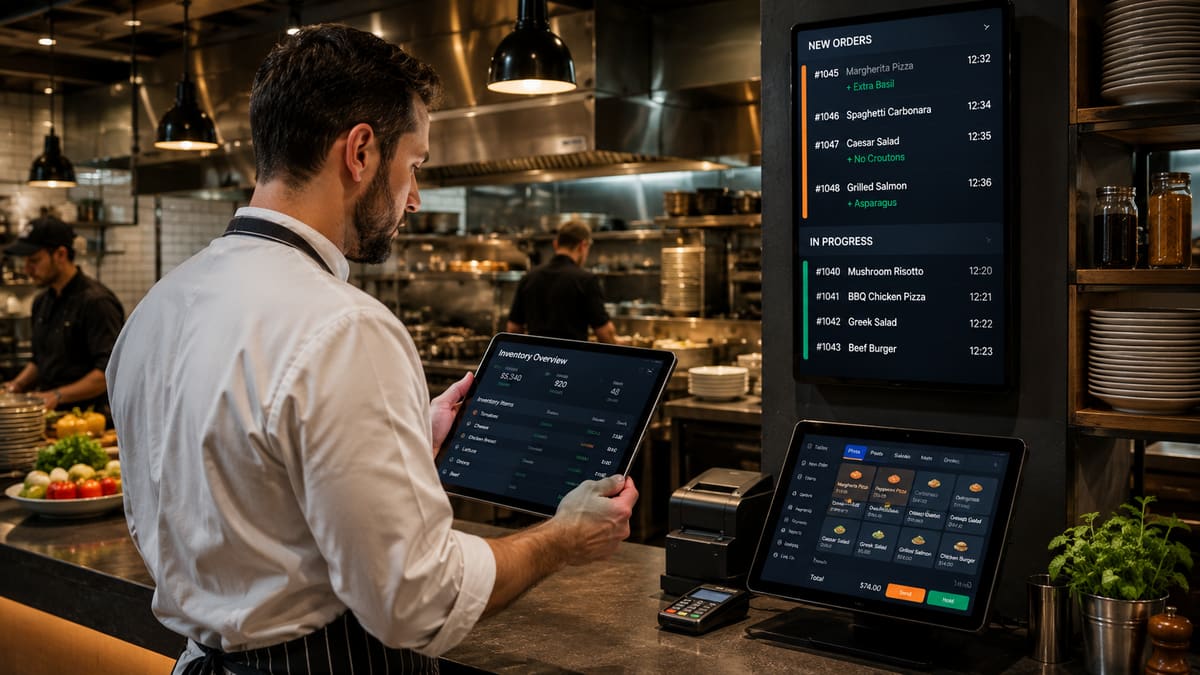
An ERP (Enterprise Resource Planning) system built for restaurants integrates every operational function. POS (Point of Sale) for dine-in, takeaway, and delivery orders — with automatic kitchen display systems so chefs see orders in real time. Inventory management with automatic deduction as items are sold, low-stock alerts, and supplier order suggestions. Staff management with scheduling, attendance tracking, and payroll calculation. Financial reporting with daily sales summaries, profit per dish, and monthly P&L statements. Customer loyalty program management.
Real Numbers from Real Restaurants
Restaurants that implement proper ERP systems typically see 15–25% reduction in food waste within the first 3 months, simply because inventory visibility stops over-ordering. Billing accuracy reaches near 100%, eliminating revenue leakage. Staff scheduling efficiency improves, reducing overtime costs. And the owner finally has data to make decisions — knowing which menu items drive profit and which are costing money.
Custom vs Off-the-Shelf
Off-the-shelf restaurant software exists, but it's rarely built for Nepal's specific context — our cuisine varieties, our delivery platforms, our payment methods (eSewa, Khalti, cash), our tax structure. Custom ERP built by a local team means the system fits your restaurant, not the other way around. It integrates with the platforms you already use, supports the workflows your staff already follow, and can be expanded as your business grows.
Getting Started
You don't need to implement everything at once. Start with POS and inventory management — these deliver the fastest ROI. Add staff management, reporting, and loyalty features as your team adapts. ZilFox builds restaurant ERP systems designed for Nepal's restaurant industry, from single-location cafes to multi-branch chains. The investment pays for itself — typically within 6–12 months through waste reduction and error elimination alone.